Understand
We pair research with local knowledge to learn what the material is, what it carries and what the coast needs.
SCIENCE · COMMUNITY · INNOVATION
Every season, the Caribbean sends sargassum toward the coast of Belize. We meet it on the water, before it reaches the beach, and transform it into Bloom, a natural fiber that textile makers, manufacturers and innovators build on.
ABOUT THE INSTITUTE
BIMS Institute is a marine science company registered in Belize. We work from Santa Cruz Village in the Stann Creek District, where we will build our research campus.
We bring scientists, coastal communities and industry to the same table and turn marine challenges into working businesses. Sargassum came first. We studied the material, tested it and proved that crews from our own villages can make a safe, useful product from it. The Institute is where that proof becomes a laboratory, a training ground and a launchpad for what comes next.
Explore our work ↗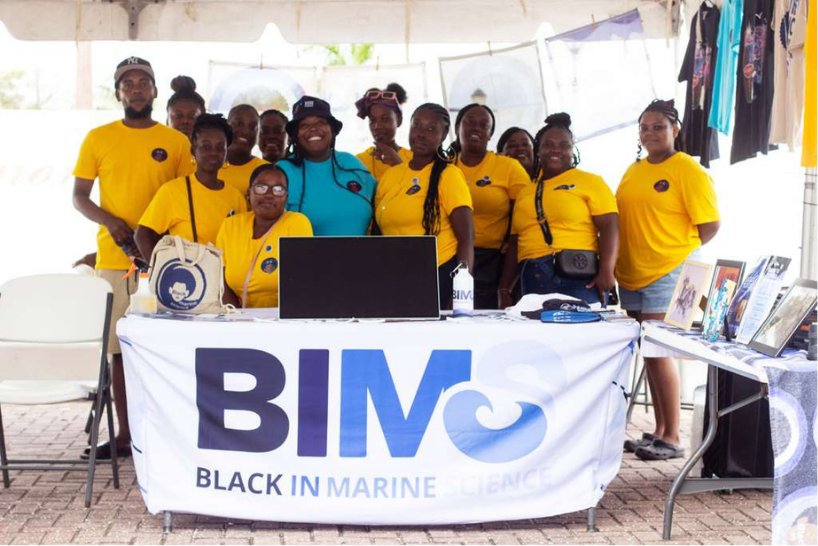
The BIMS Institute, based in Belize, powers a resilient Blue Economy by advancing ocean innovation and blue technology while cultivating inclusive scientific leadership rooted in culture and community.
We envision a global hub for Blue Economy leadership, where coastal resilience, cutting-edge technology, and cultural knowledge converge to protect our shores and inspire the world. The Institute will serve as a living laboratory, proving that community-driven science and innovation can secure both ecological health and economic prosperity for generations to come.
FLAGSHIP INITIATIVE
BLOOM TO BUSINESS
Each year the Caribbean delivers an abundant resource to our coast. We meet it on the water, before it becomes a problem, and turn it into opportunity.
Our captains harvest sargassum while it is still afloat. Our processors refine it into Bloom, and our marine scientists test every batch. From there the fiber travels in many directions: into apparel, home decor and luxury packaging, into materials manufacturers already produce, and into products innovators are creating for the first time. Every bag of Bloom represents a shoreline protected, a wage earned in a coastal village and an industry taking root where the tide comes in.
See Bloom and order
We collect sargassum from the water while the material is clean and light, before the beach ever sees it.
HOW CHANGE HAPPENS
One line of work, from the first sample to the first sale.
We pair research with local knowledge to learn what the material is, what it carries and what the coast needs.
Residents, crews and partners shape the work with us, so the solution fits the place it serves.
We turn evidence into products, skills and procedures, then test them, improve them and write them down.
Jobs, revenue and a quality standard keep the benefit on the coast long after a project ends.
THE PRODUCT
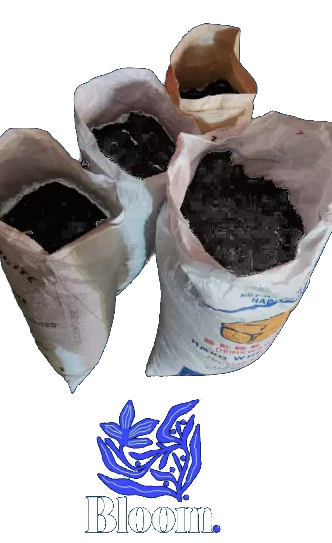
We are transforming invasive sargassum into a natural fiber called Bloom, a sustainable raw material for the global textile market. Dry, clean and refined to a written specification, Bloom gives apparel, home decor and luxury packaging a regenerative, biodegradable source.
 Order Bloom or request information ↗
Our marine scientists set the specification and our processors meet it. We wash every batch to remove the salt, sand and metals that sargassum gathers at sea, and an independent laboratory confirms the result. The Certificate of Analysis arrives with the order.
Crews from Placencia, Seine Bight and Santa Cruz harvest, process and document every batch against our written standards, a discipline that prepares both the product and the people who make it for certification. The knowledge of this coast shapes the work, and the hands of this coast perform it.
Textile makers spin Bloom into apparel and home decor. Manufacturers fold it into luxury packaging and the materials they already produce. Innovators take it into building materials, personal care and ideas still forming. One regenerative fiber, many futures.
WHAT WE BRING TO OUR PARTNERS
We work across disciplines and sectors to turn marine knowledge into action.
We build the record on marine biodiversity and environmental change through research partnerships and fieldwork rooted in the community.
We bring coastal knowledge, community priorities and scientific practice to the same table.
We turn environmental challenges and underused resources into tested products and circular-economy businesses.
We teach the skills that connect people to marine science, environmental solutions and blue-economy work.
We work with organizations and agencies to shape projects, share knowledge and connect research with implementation.
We make marine science accessible through storytelling, outreach and opportunities to take part.
OUR IMPACT
We designed Bloom to Business to return value to the coast, to public policy, to the market and to the classroom at once.
A season of sargassum becomes a season of work. Crews from Placencia, Seine Bight and Santa Cruz earn wages on the water and at the facility, learn a trade that stays with them and watch their beaches remain clear because the material never arrived. The village councils of Santa Cruz and Placencia have put their support in writing.
Every batch adds to the national record. Our collection logs show where, when and how much sargassum left the water, and our laboratory results describe what the material contained. The Fisheries Department, the Belize Agricultural Health Authority and the Department of the Environment gain the evidence to set standards for an industry Belize is building for the first time.
Funders find a company prepared to grow. We have designed the facility, modeled the business across five years, priced the product and written the standards that govern every batch. That foundation turns a grant into a measurable investment and an investment into a scalable one: grants build the facility and the quality system, catalytic capital funds the first seasons, and equity buys a share of the platform and every product the accelerator produces.
The next generation of marine scientists trains here. Fellows enter through our university pipeline and work on live problems with real data. Students discover a career in marine science within their own district. Researchers gain a field site, a processing facility and a dataset on pelagic sargassum that grows with every season, and we share what we learn with coastal communities across the Caribbean.
COMMUNITY CAPACITY IN ACTION
We have trained more than 50 people from the Placencia Peninsula and Santa Cruz as sargassum processors, and the number keeps growing.
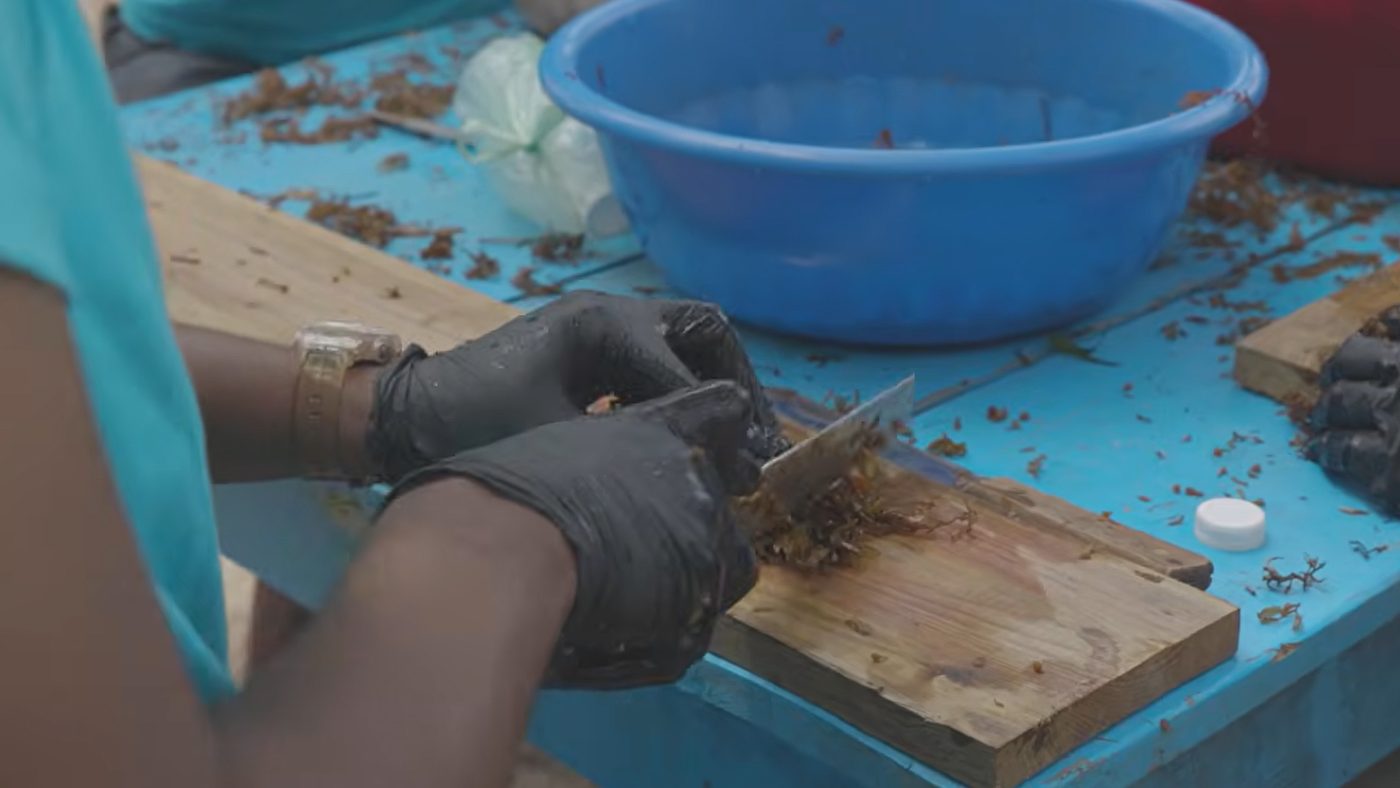
Each of them learned to collect at sea, clear and wash the material, dry and mill it, and document every step against our written standards. Those skills stay in the community. We are building a processor credential that will give each of them a recognized standing in an industry Belize is creating for the first time.
LET'S BUILD SOMETHING THAT LASTS
We welcome conversations with coastal communities, researchers, educators, public agencies, manufacturers, funders and organizations working toward healthier oceans and stronger communities.
Start a conversationGET IN TOUCH
Interested in Bloom, research collaboration, training or supporting the Institute's work? Send us a note and we will reply.